Sesame Australia brings together sesame genetics, breeding, crop evaluation and commercial development. Our work considers how a variety fits the growing environment, how planting seed reaches a production program and how harvested sesame meets its intended market.
As an HGT Investment Group business, we connect with the Group’s seed and commercial capabilities to support Australian development and selected international partnerships.
Our vision
A dependable Australian sesame industry, built on suitable genetics, practical production systems and long-term market relationships.
Our mission
Connect sesame breeding, field evaluation, planting seed systems and commercial partnerships to develop crops with a clear production and market purpose.
HGT SESAME GENETICS
Commercial Varieties
Explore commercial sesame varieties from Sesame Australia. Select a variety for planting seed information, production considerations and grain-market requirements.
Commercial sesame planting seed enquiries, connecting the growing program with the intended grain market.
ARTA is part of Sesame Australia’s commercial sesame variety portfolio. A planting seed enquiry starts with the proposed growing region, sowing window, production scale and intended end use. These details help connect variety selection with crop establishment, harvest planning and the quality requirements of the harvested sesame grain.
Production Planning
Discuss the local growing season, irrigated or rainfed production system, paddock drainage and available sowing window. The proposed rotation and harvest period help frame ARTA’s fit within the program.
Crop & Harvest
Review planting equipment, establishment requirements, crop monitoring and harvest access. Include the intended cleaning and storage arrangements when planning how the crop will move from paddock to a defined grain specification.
Grain & Market Pathway
Identify the intended whole-seed, dehulled sesame, tahini or sesame-oil market. Product specifications and processing requirements form part of the commercial discussion.
Adaptability
Regional SuitabilityMap TBA
Variety-specific latitude guidance will be added here.
Commercial sesame genetics positioned for intensive production programs with reliable moisture and consistent management.
CAPSILON’s commercial positioning centres on managed sesame production, with attention to crop uniformity, reproductive development and harvestable grain. Planting seed discussions consider how the proposed growing system can support establishment, flowering and seed fill, followed by a practical harvest and processing pathway.
Production Planning
Discuss warm, well-drained production systems with irrigation or reliable rainfall, timely establishment and harvest access. Local conditions and the intended season determine the suitability assessment.
Crop & Harvest
Consider stand uniformity, flowering and capsule development, moisture continuity, maturity and grain recovery. Align machinery and harvest timing with the production program.
Grain & Market Pathway
Define the target sesame grain specification, including seed size, cleanliness and processing requirements. Oil characteristics and ingredient performance should be assessed for the intended buyer and end use.
Adaptability
Regional SuitabilityMap TBA
Variety-specific latitude guidance will be added here.
Commercial sesame genetics with a focus on rotation planning and the time available between sowing and harvest.
COMPACTA’s commercial positioning focuses on the place of sesame within the farming calendar. Planting seed discussions consider the available growing season, rotation timing and the opportunity to complete and harvest the crop within the planned window. Any shorter-season or later-sowing use is assessed for the proposed location.
Production Planning
Discuss warm inland or subtropical production systems where sowing time, season length and harvest conditions can be considered together. Include the preceding crop and the timing of the following rotation.
Crop & Harvest
Review flowering and maturity requirements, crop completion, standing ability, seed retention and machinery access. The harvest plan should account for the seasonal finish and local weather risk.
Grain & Market Pathway
Confirm whether harvested sesame is intended for whole grain, food ingredients or oil processing. Cleaning, drying where required, and storage need to support the agreed product specification.
Adaptability
Regional SuitabilityMap TBA
Variety-specific latitude guidance will be added here.
Commercial sesame genetics positioned for managed production with a defined growing season and harvest pathway.
INDURA’s commercial positioning brings the growing program and harvest requirements into one discussion. Variety assessment considers crop structure, reproductive development and the practical recovery of sesame grain. Planting seed enquiries should identify the intended season, water-management approach and the route from harvest through cleaning and grading.
Production Planning
Discuss warm, well-drained paddocks with timely sowing, a defined water-management plan and sufficient growing time before the intended harvest period. Suitability is assessed against the proposed production environment.
Crop & Harvest
Consider plant structure, capsule placement, moisture management through flowering and seed fill, crop uniformity and harvest timing. Review the equipment and handling steps needed to recover and preserve the grain.
Grain & Market Pathway
Develop the crop alongside a clear cleaning, grading and processing plan. Whole sesame, food ingredients and sesame oil may require different specifications and handling arrangements.
Adaptability
Regional SuitabilityMap TBA
Variety-specific latitude guidance will be added here.
Commercial sesame variety enquiries covering planting seed, production requirements and grain delivery specifications.
INTERA forms part of Sesame Australia’s commercial sesame portfolio. Discussions connect planting seed requirements with the farming system and the intended use of the harvested crop. A clear production brief helps assess variety choice alongside establishment, crop management, harvest capability and the requirements of processors or commercial buyers.
Production Planning
Provide the production location, proposed planting period, water availability and indicative area. Include any rotation, machinery or seasonal constraints that need to be considered when assessing INTERA for the program.
Crop & Harvest
Plan establishment and crop monitoring alongside harvest timing, grain handling and lot identification. Link field operations with cleaning, storage and delivery requirements from the outset.
Grain & Market Pathway
Discuss the intended market for sesame grain or processed ingredients, including whole seed, dehulled products and sesame oil. Buyer specifications help define the quality information needed for the proposed pathway.
Adaptability
Regional SuitabilityMap TBA
Variety-specific latitude guidance will be added here.
Commercial sesame planting seed enquiries shaped by the growing environment and the intended food or oilseed market.
MEDIANA is included in Sesame Australia’s commercial variety portfolio. Enquiries bring together the production location, planting seed requirement, growing calendar and proposed sesame market. This supports a focused discussion of variety selection and the practical steps needed to connect the crop with grain, ingredient or oil-processing requirements.
Production Planning
Discuss the local season, sowing and harvest periods, drainage and water-management approach. Provide the proposed area and farming system so MEDIANA can be considered within the wider production plan.
Crop & Harvest
Consider establishment, crop monitoring and the equipment available for harvest. Define how harvested sesame will be cleaned, identified, stored and moved to the next stage of the supply chain.
Grain & Market Pathway
Identify the intended use, such as whole sesame, roasted ingredients, tahini or oil. Discuss processing requirements, product specifications and traceability expectations with the relevant commercial partner.
Adaptability
Regional SuitabilityMap TBA
Variety-specific latitude guidance will be added here.
Whole sesame grain, dehulled seed, roasted ingredients, tahini and sesame oil have different quality and processing requirements. Understanding those requirements helps guide genetics, production and handling decisions.
Growers & production partners
Discuss your region, growing system, planting area, machinery and intended season as part of a sesame evaluation or commercial development opportunity.
Explore collaborations in genetics evaluation, seed systems, distribution and market development with clear responsibilities and a shared commercial purpose.
Planting seeds establish the next crop. Harvested sesame grain enters food, ingredient and oil-processing pathways. For harvested product enquiries, connect with HGT Crop Supply.
PART OF HGT INVESTMENT GROUP
Specialist knowledge. Shared direction.
Sesame Australia connects the Group’s genetics, seed and commercial capabilities with the development of a practical sesame production and market pathway.
Meet our corporate leadership, board and scientific and technical team in the central HGT directory.
Which Commercial Sesame Varieties Are in the Portfolio?
Sesame Australia’s commercial variety portfolio includes ARTA, CAPSILON, COMPACTA, INDURA, INTERA and MEDIANA. Open a variety profile to explore its commercial information and planting seed enquiry pathway.
How Is Planting Seed Availability Confirmed?
Tell us the variety, growing location, indicative planting area or seed quantity and intended sowing period. Availability, supply timing and commercial terms are confirmed for each enquiry.
Can growers enquire about future sesame production?
Yes. Growers can provide their location, farming system, planting area, equipment, intended season and market pathway. An enquiry allows the opportunity to be assessed but does not guarantee seed supply or participation.
Does Sesame Australia work with researchers and seed partners?
Relevant research, evaluation, multiplication and seed-system collaborations are considered where responsibilities, data, genetics, intellectual property, compliance and commercial expectations can be clearly defined.
Can processors, buyers and international partners participate?
Yes. Sesame Australia welcomes credible enquiries from processors, buyers, distributors, seed companies and other commercial organisations. Each opportunity is assessed for strategic fit, counterpart capability, regulatory requirements and an appropriate commercial pathway.
Where are sesame technical updates published?
Technical explanations, research summaries and crop-development articles are published through the HGT Knowledge Hub. Commercial and genetics-specific questions should be submitted through the Sesame Australia enquiry pathway.
CONNECT WITH SESAME AUSTRALIA
Start with the crop you want to develop
Tell us about your sesame genetics, planting seed, production, processing or partnership requirements.
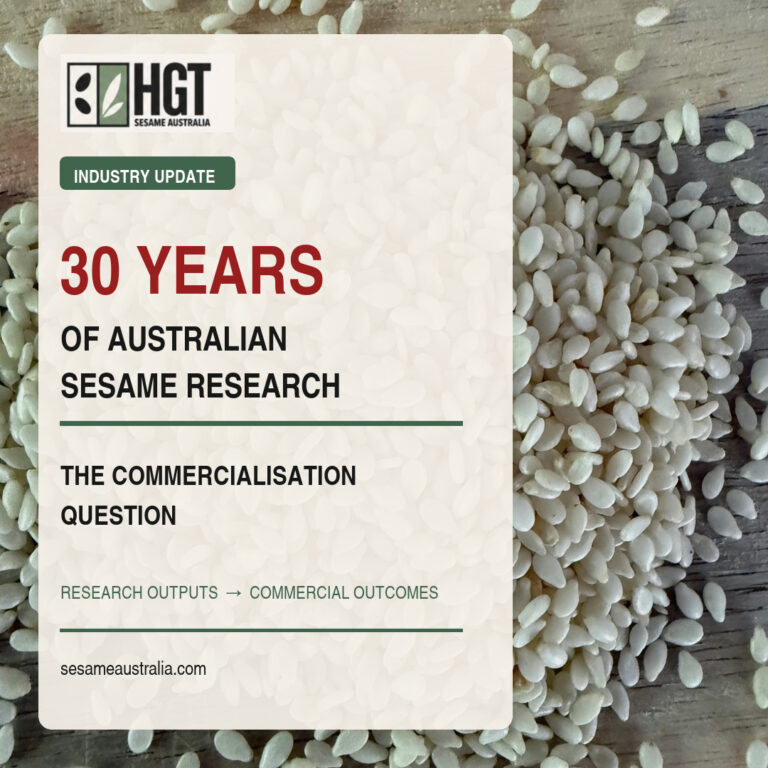
Australia has studied sesame for more than three decades and is now funding another major research cycle. The commercialisation test is whether research outputs…